
The Mistake That Starts Every Argument
Most homeowners treat "the garage door" like one object with one age. It's not. The door panels, the opener motor, the springs, and the cables are separate systems that wear out on completely different schedules. One spouse says "it's only twelve years old, it's fine," the other says "it's grinding and shaking, replace it," and both are right about different parts. The mistake is tempting because it's simpler to think in terms of one lifespan instead of four. But that's exactly how people end up either replacing a perfectly good door because the opener is dying, or limping along on springs that are long past their rated life because the door still looks fine.
What Actually Lasts How Long
Here's the realistic breakdown, assuming average use (around four cycles a day) and at least occasional upkeep:
- Steel door panels: 20-30 years. They don't wear out so much as they get dented, rust at the bottom corners, or warp from heat and moisture.
- Wood or wood-composite doors: Often 10-15 years in this climate, because humidity causes swelling, warping, and seam separation faster than in drier regions.
- Openers (the motor unit): 10-15 years. Gears, circuit boards, and sensors degrade with age and heat exposure, even if the door itself is perfect.
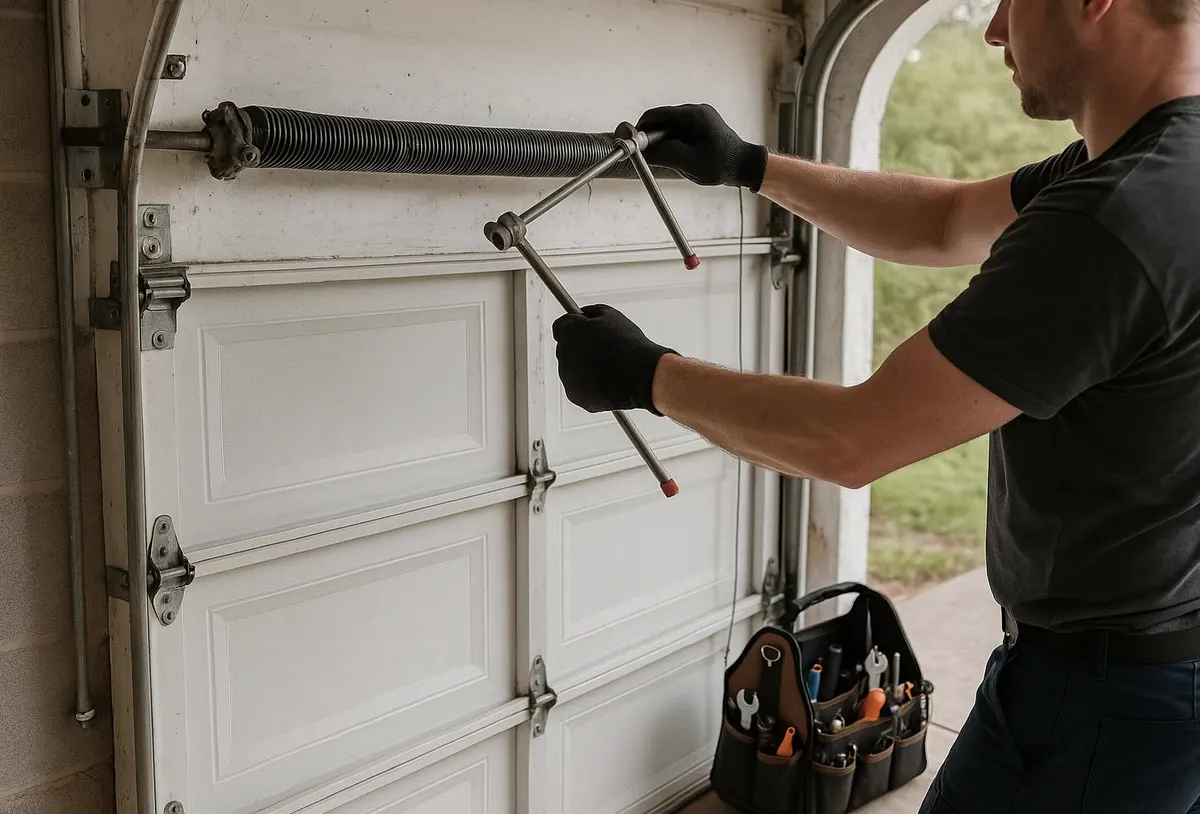
- Torsion springs: Rated by cycles, not years. A standard 10,000-cycle spring lasts roughly 7-9 years at average use, less if the door is cycled more often or was never properly balanced.
- Cables, rollers, hinges: 7-10 years as wear parts. These fail quietly through fraying or pitting long before anyone notices.
So a fifteen-year-old door with a five-year-old opener and springs that were never replaced isn't "one old door" — it's three different clocks, and one of them is probably overdue.
What Shortens the Timeline Here
Florida's climate is harder on garage doors than people expect, mostly because of moisture and storm stress rather than direct heat:
- Humidity and afternoon downpours drive rust into hinges, tracks, and the bottom seal area, and cause wood doors to swell and stick.
- Skipping lubrication lets that moisture turn into grinding metal-on-metal wear instead of a quick fix.
- Running an unbalanced door forces the opener's motor and gears to work harder every single cycle, shaving years off it even though the door looks fine.
- Wind pressure during storm season stresses tracks, panels, and the opener's connection to the door if the hardware isn't rated for wind load. Repeated flexing during a rough season adds up.
- Ignoring small off-track symptoms — a slight shudder, a cable that looks loose, a panel that doesn't sit flush — lets a minor fix turn into a full panel or cable replacement.
What Actually Extends It
None of this requires anything exotic, just consistency:
- Annual tune-ups that include lubrication, balance checks, and hardware tightening catch the rust and wear before they become failures.
- Replacing springs proactively based on cycle count instead of waiting for the snap, which usually happens at the worst possible moment.
- Fresh weatherstripping keeps humidity and wind-driven rain from reaching the bottom panel and hardware.
- A quick visual check after any hard storm — tracks, rollers, and the bottom seal — so wind-load stress gets addressed before the next system rolls through.
The Quick Test to Settle the Argument
Ask two separate questions instead of one: "How old is the opener?" and "How old are the springs?" If the opener is pushing 12-15 years and starting to hesitate, reverse unexpectedly, or make new noises, that's an opener conversation, not a door conversation. If the springs have never been replaced and the door feels heavy or uneven when lifted by hand with the opener disconnected, that's a spring conversation. The door panels themselves usually have the longest runway of all, especially steel ones that haven't taken storm damage.
When to Call San Antonio Garage Door Experts
If you're not sure which clock is actually running out, that's exactly what a tune-up visit answers. Our Preventive Maintenance & Tune-Ups service checks door balance, spring condition by cycle estimate, hardware wear, and opener performance in one visit, so you get a straight answer instead of a guess. If the springs are already showing their age — slow lifting, visible gaps in the coils, a door that won't stay open — our Garage Door Spring Repair team can replace them same-day before they fail on their own schedule instead of yours.
If you're in San Antonio, Dade City, Zephyrhills, Wesley Chapel, Land O' Lakes, Lutz, Saint Leo, or Trilby and want a real answer about what's actually wearing out, call San Antonio Garage Door Experts for a straightforward inspection and honest pricing — no guessing required.